In the summer of 1995, in my late teens, I had an idea. Many years before, I had ordered plans for the many types of four-wheeled bicycles, you know, the ones you find in the back of science magazines. After about an hour of studying these plans, I decided that they were unsuitable for someone who has neither the money nor tools required.
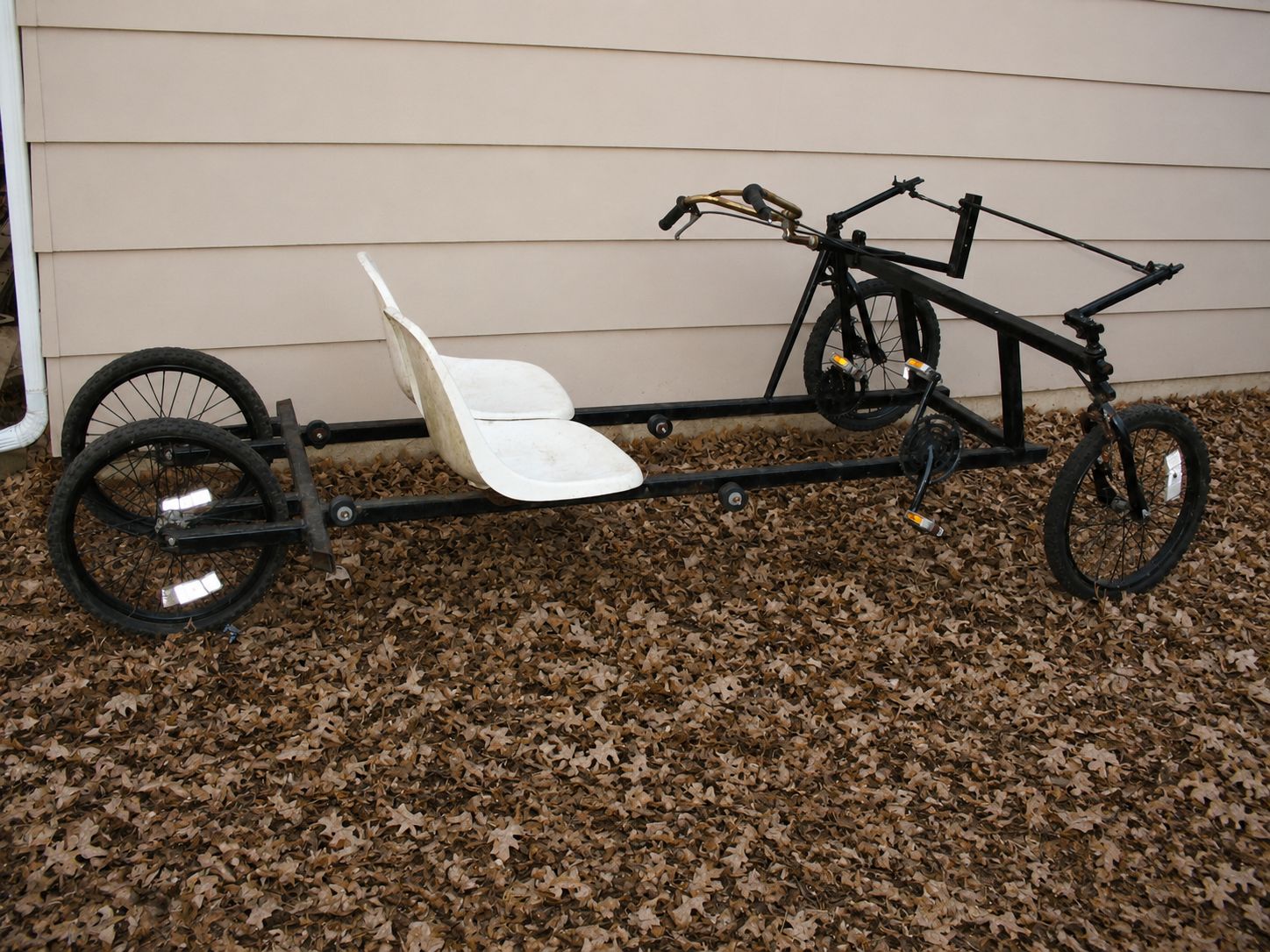
I started thinking about a better, cheaper way to build such a vehicle. I soon had my good friend Paul interested as well. We set our minds to work and a few weeks later finalized our plans.
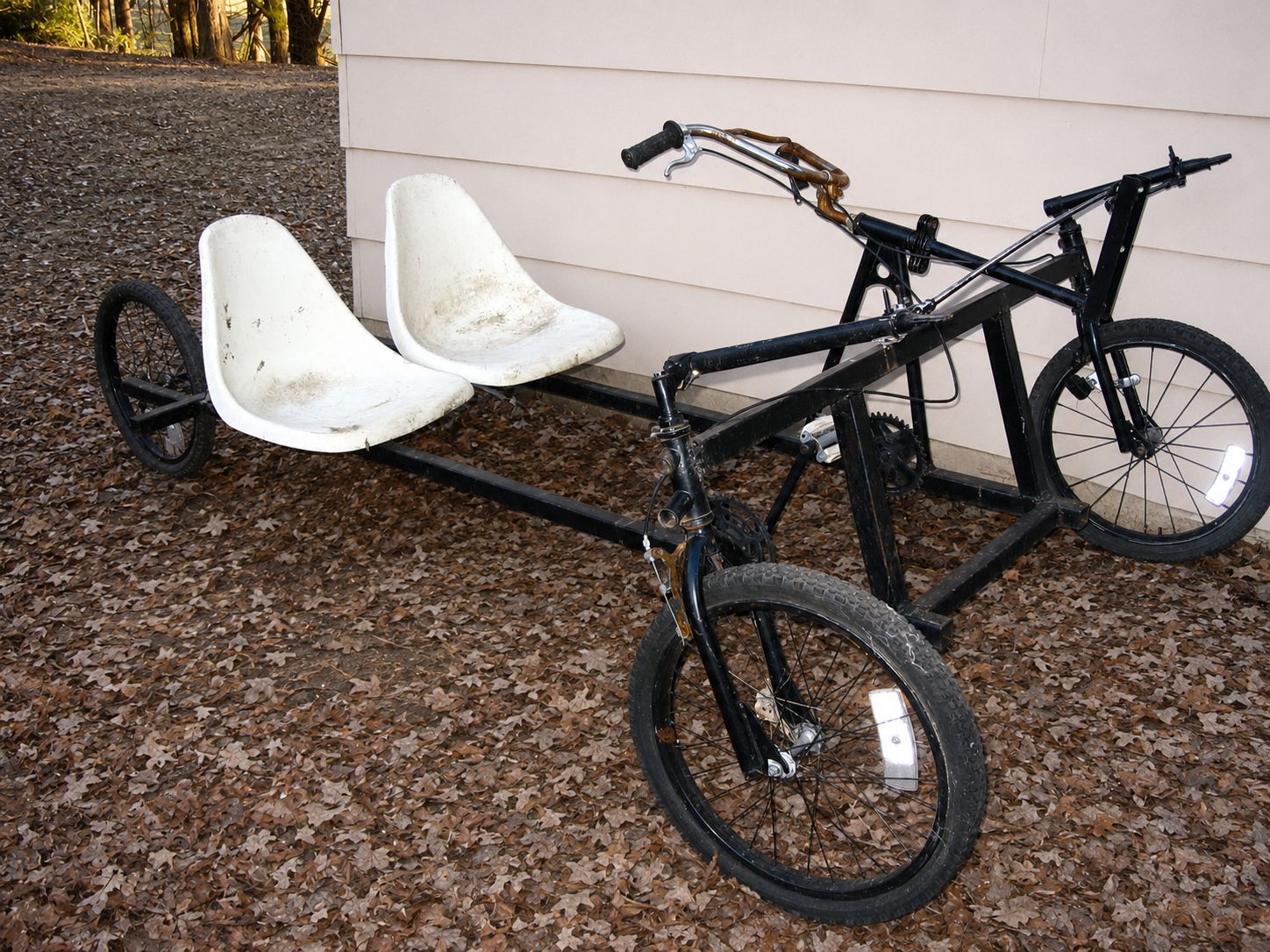
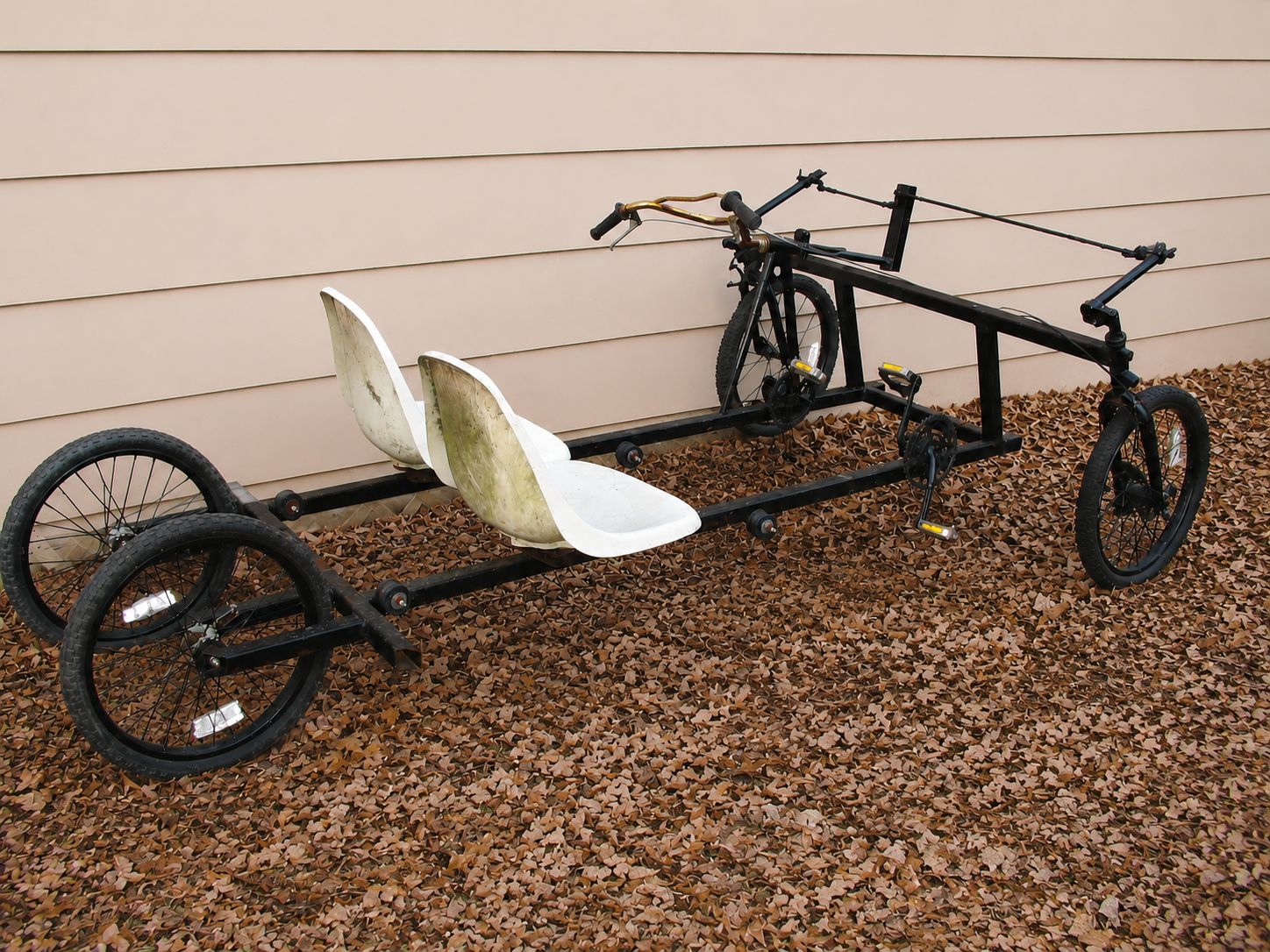
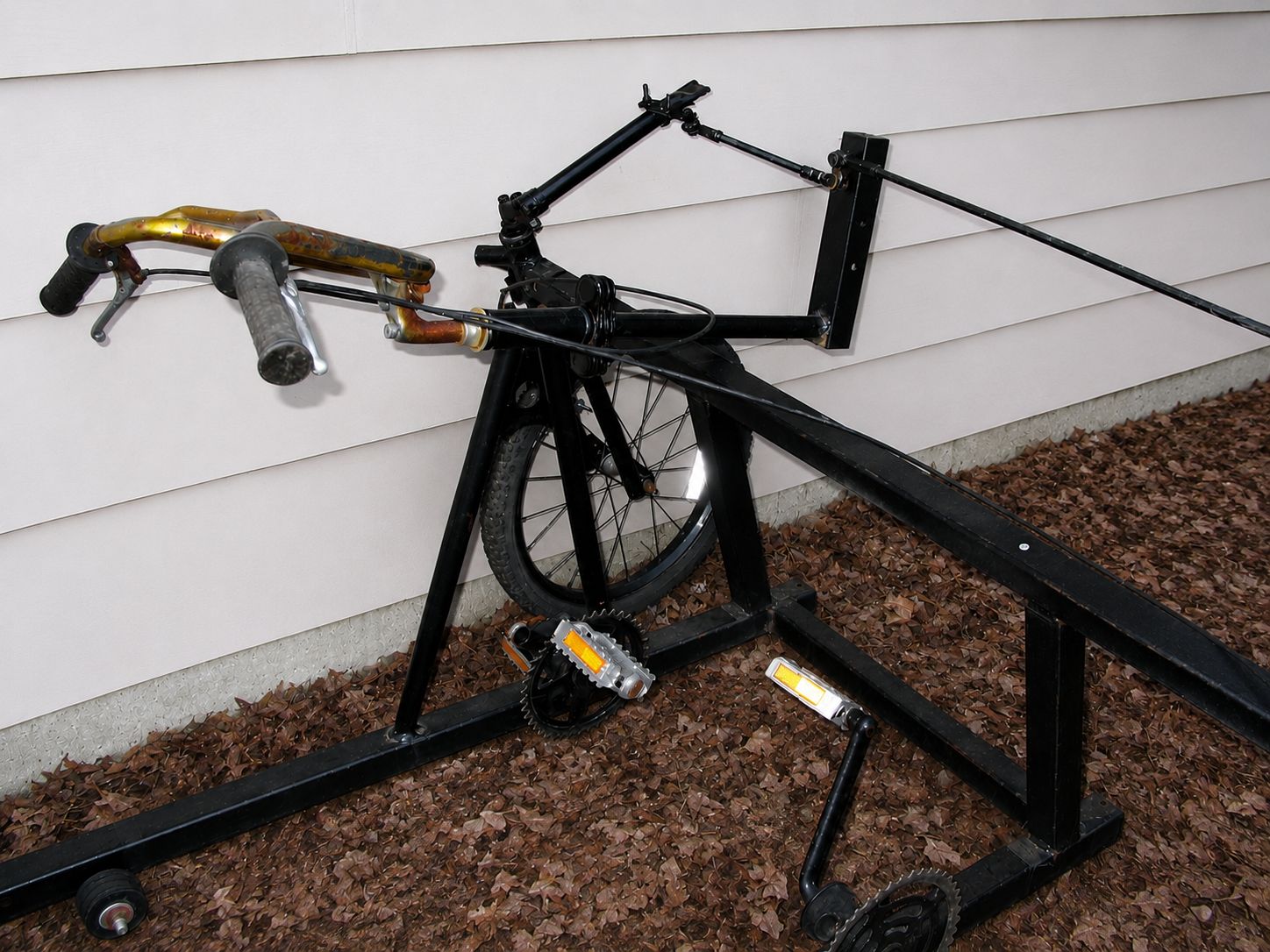
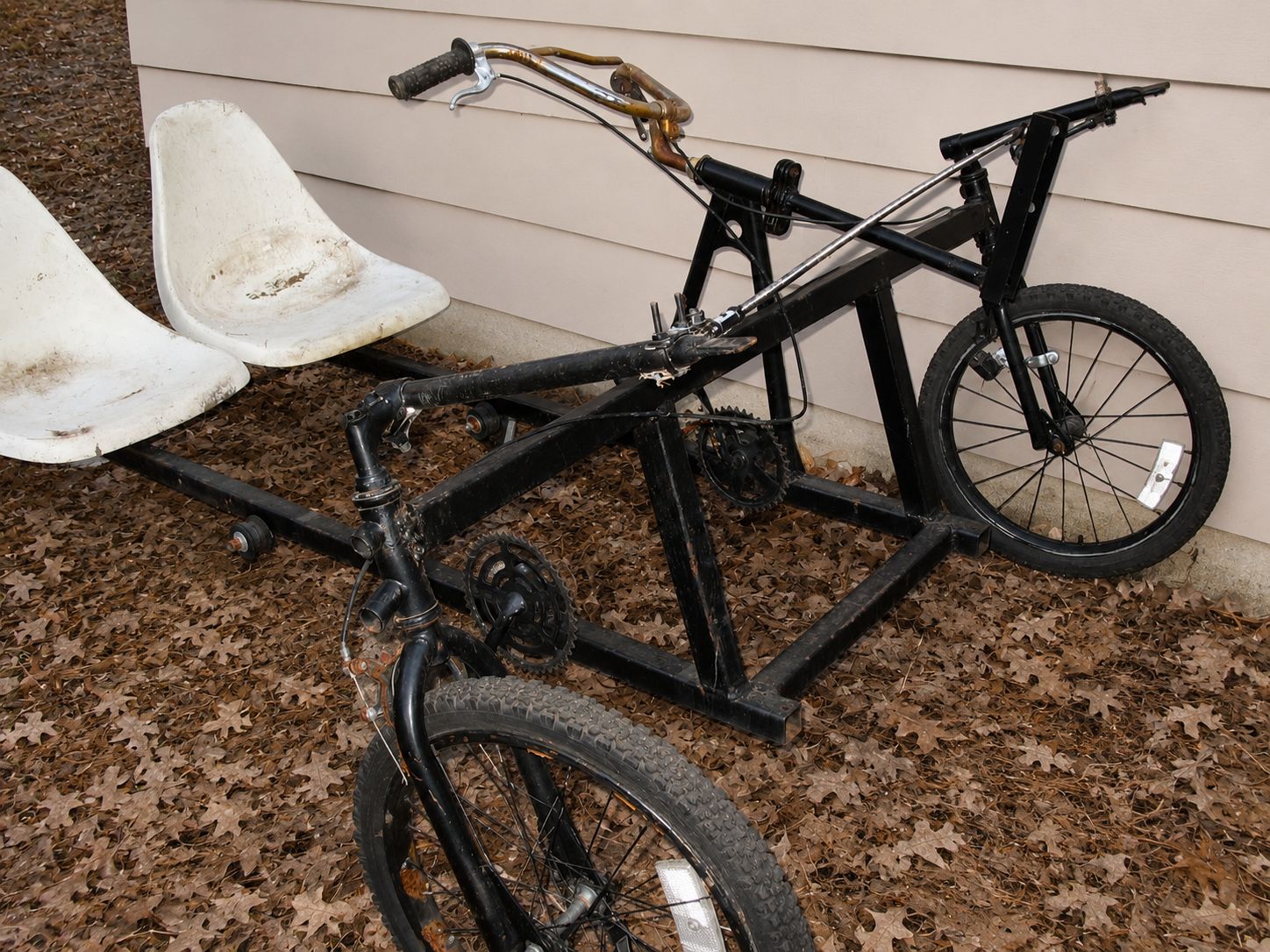
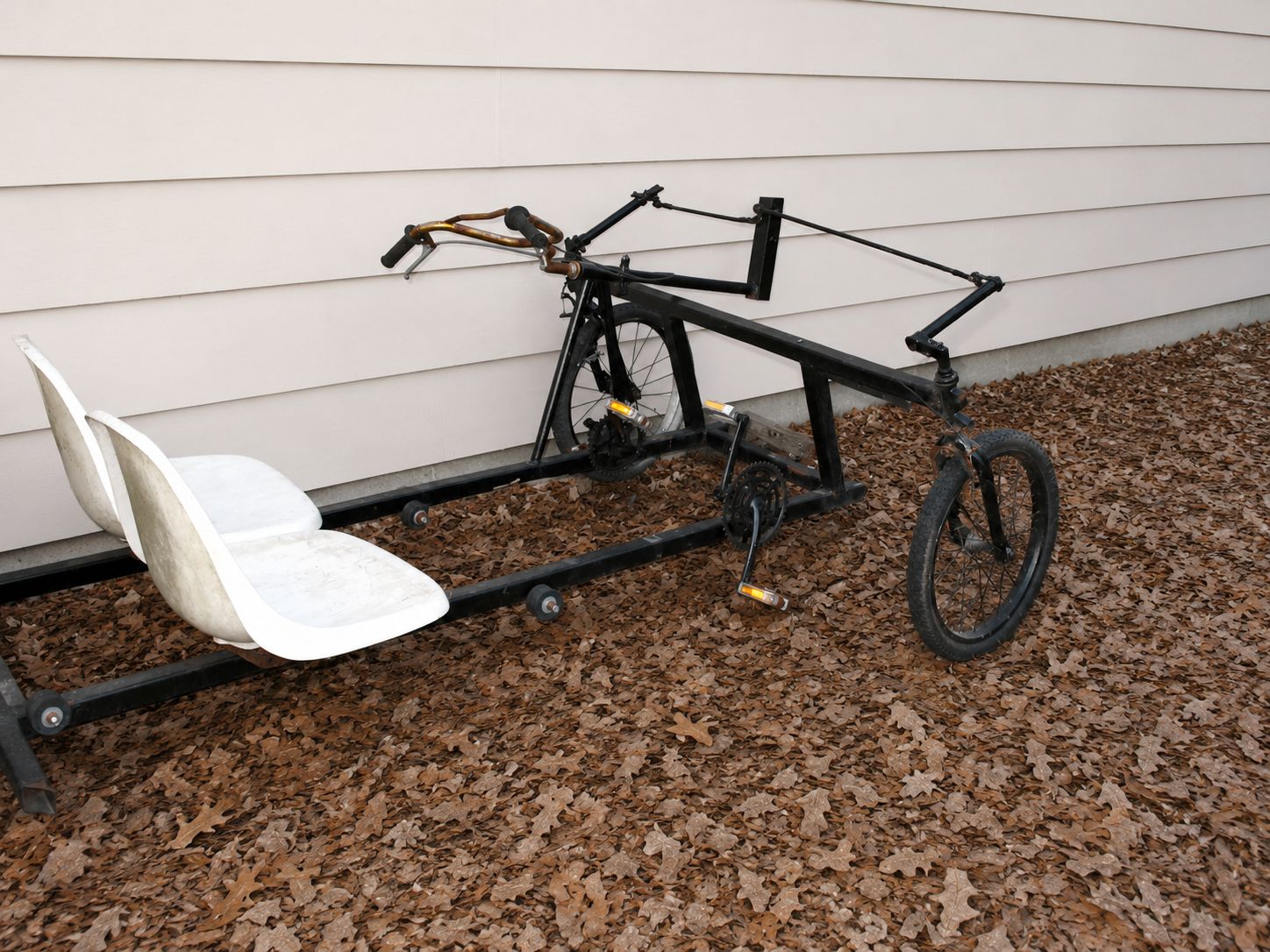
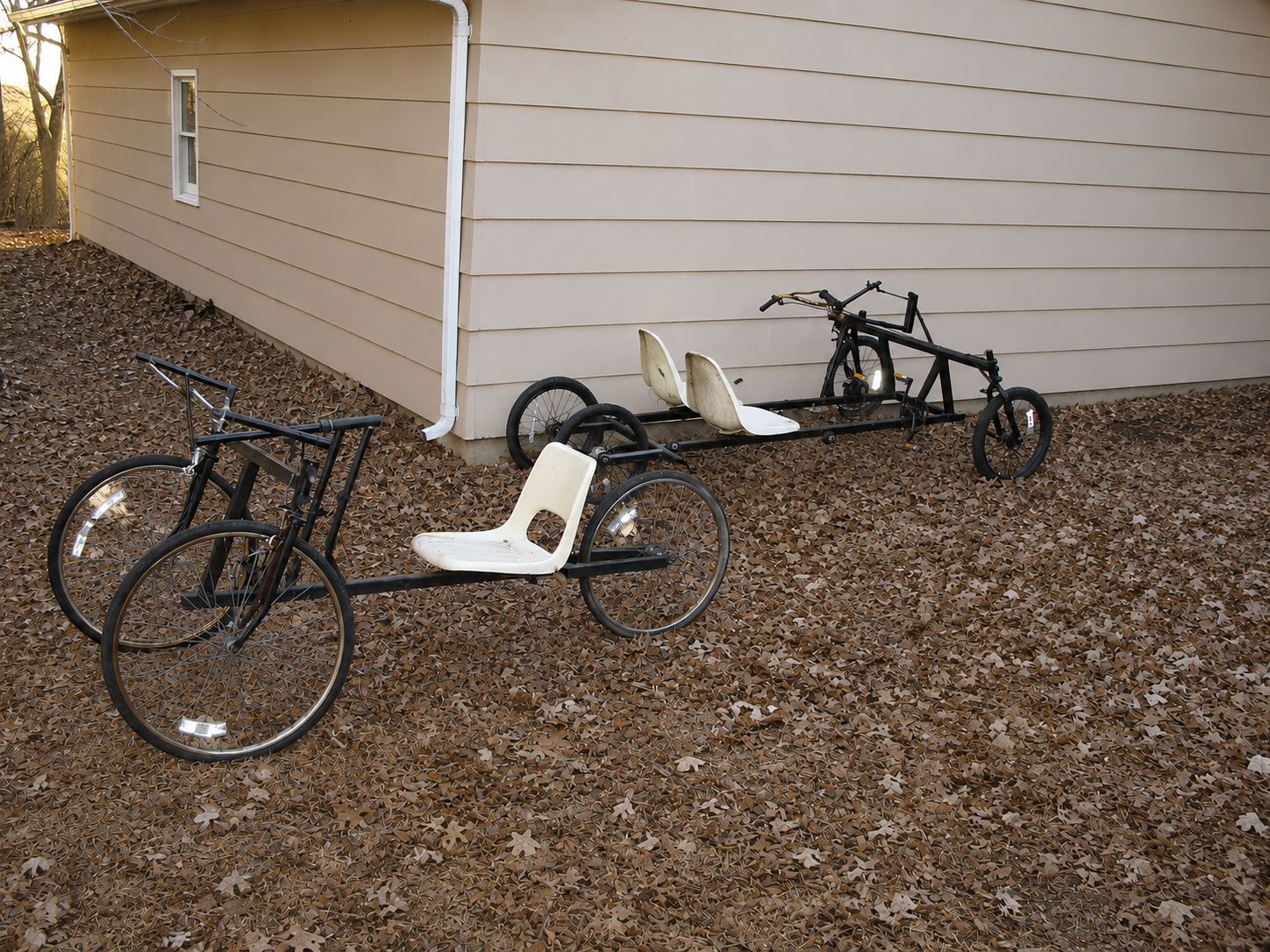
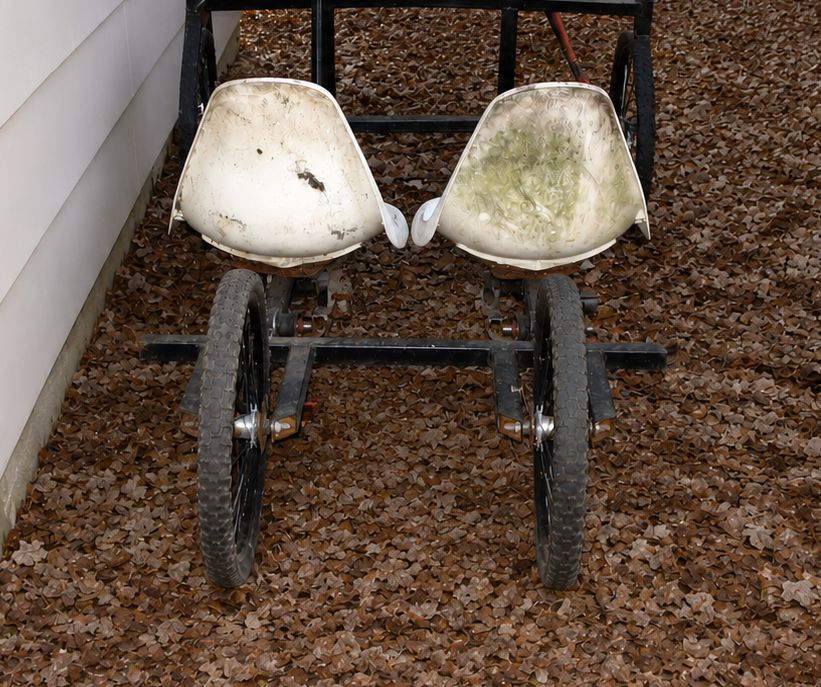
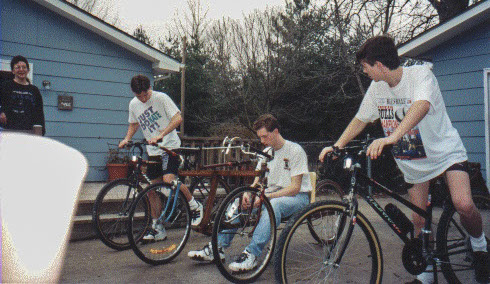
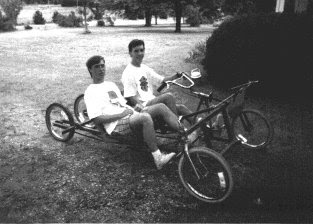
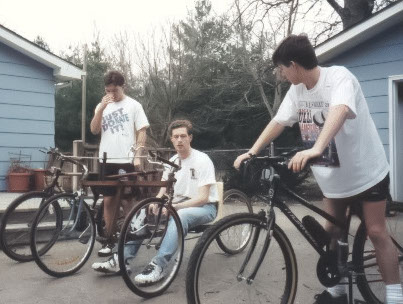
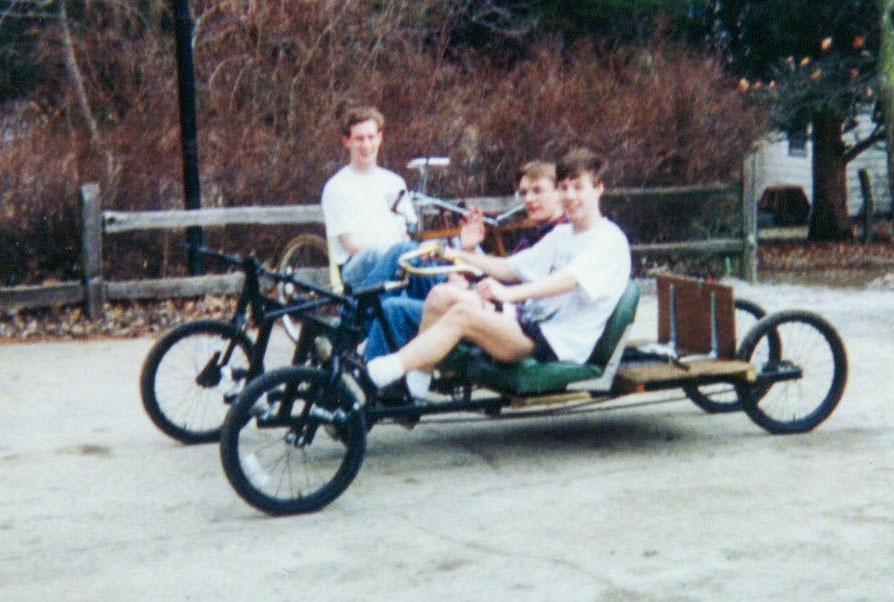
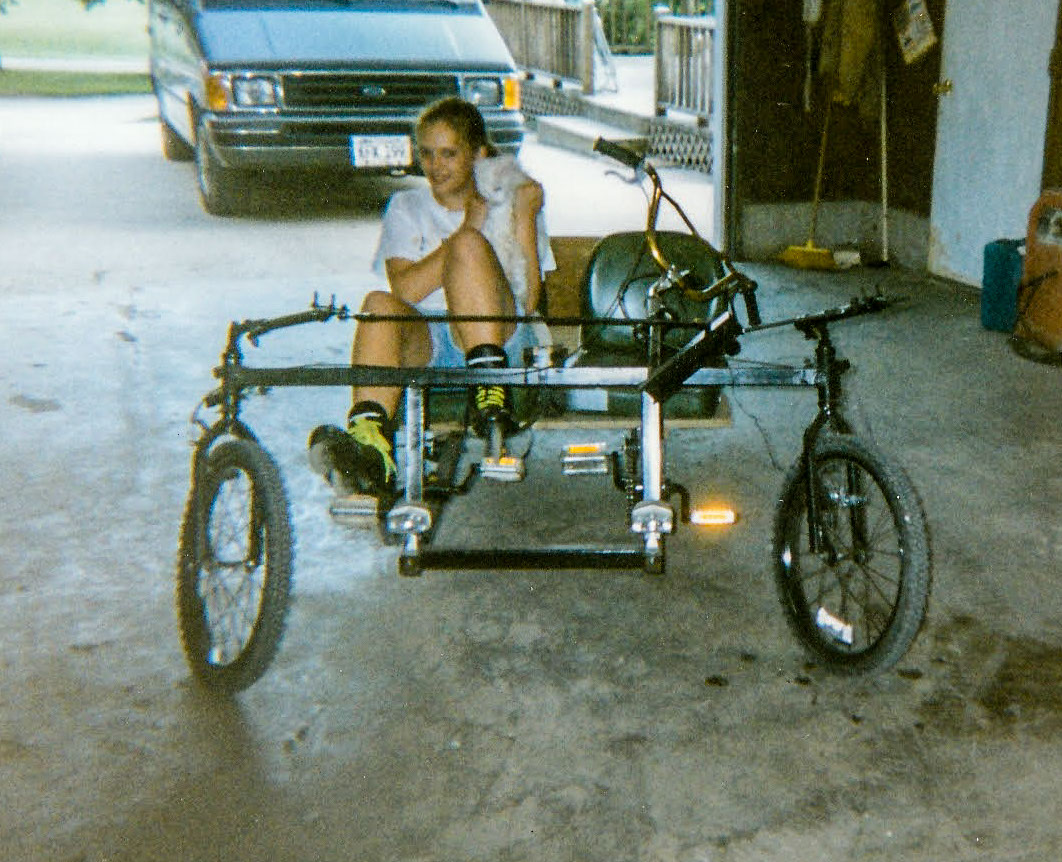
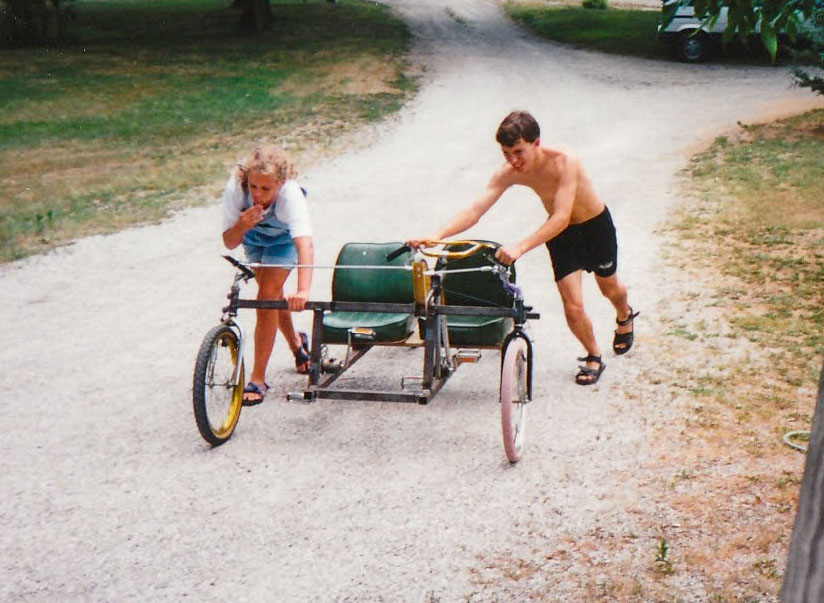
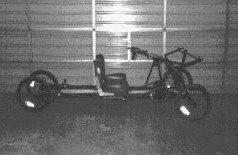
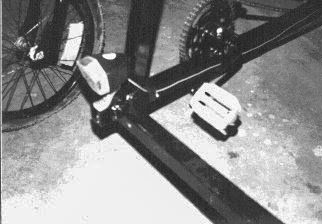
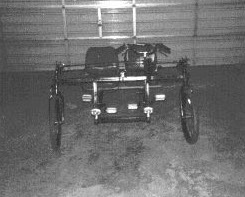
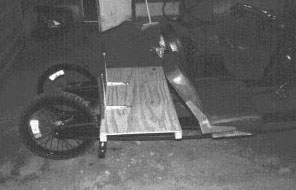
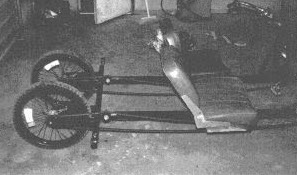
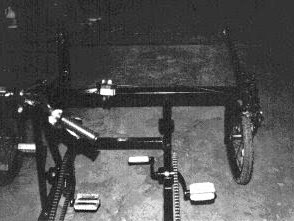
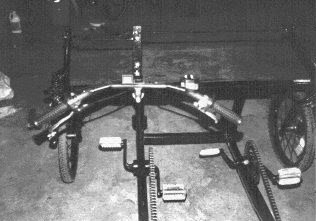
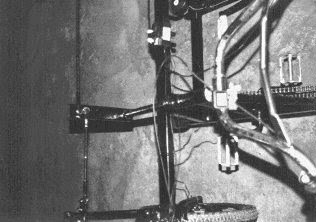
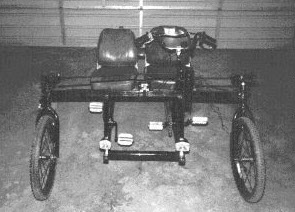
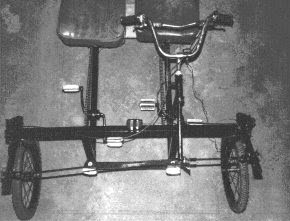
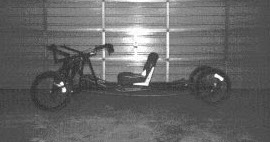
Over the next couple of months, Paul and I set to work on materializing our idea, with the generous assistance of our friend Kevin and my dad. The result was a four-wheeled bicycle that seats two side-by-side about a foot and a half off the ground. Compared to the hundreds of dollars it would have cost to build one according to the purchased plans, ours cost only $200! I’d seen comparable pre-assembled models advertised for over $5000!
It features:
- Two person capacity with room for a passenger in back
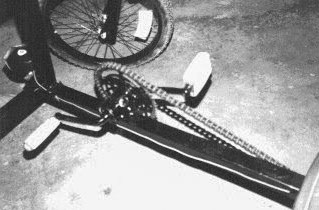
- Powered by two independent sets of pedals
- Headlights, brakelights, tailights, and turn signals
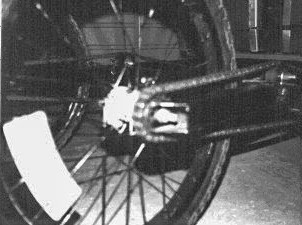
- Dual front caliper brakes and dual rear coaster brakes
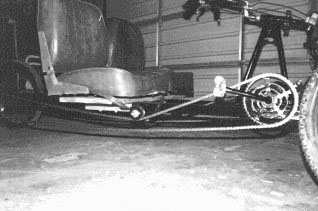
- Comfortable fishing-boat seats
- Digital speedometer/odometer
- Solid steel construction (including three bikes for parts)
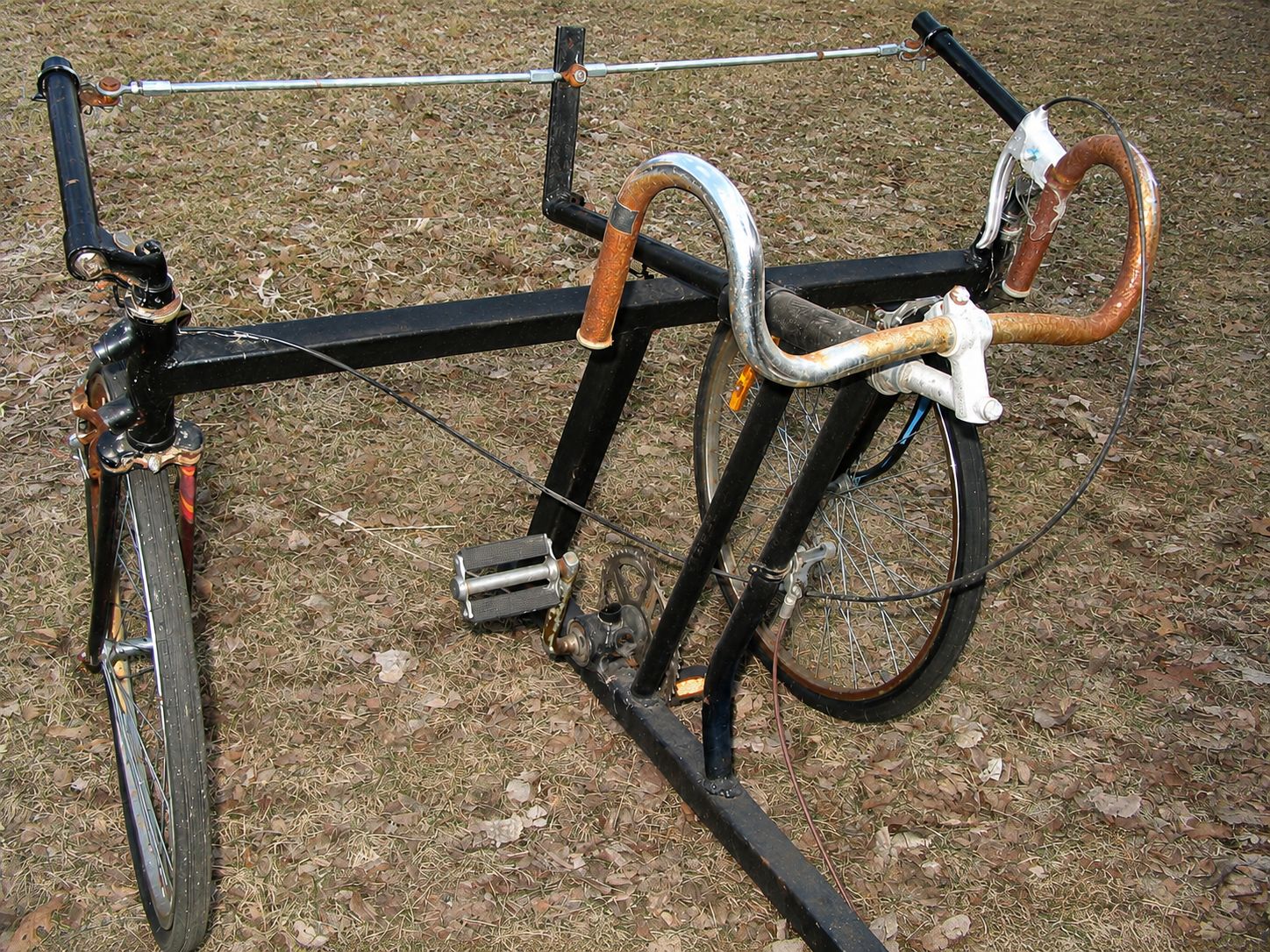
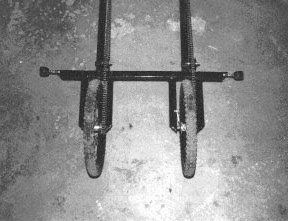
- Adjustable toe-in and pre-set camber and caster
- Rear cargo area
- Can be driven solo
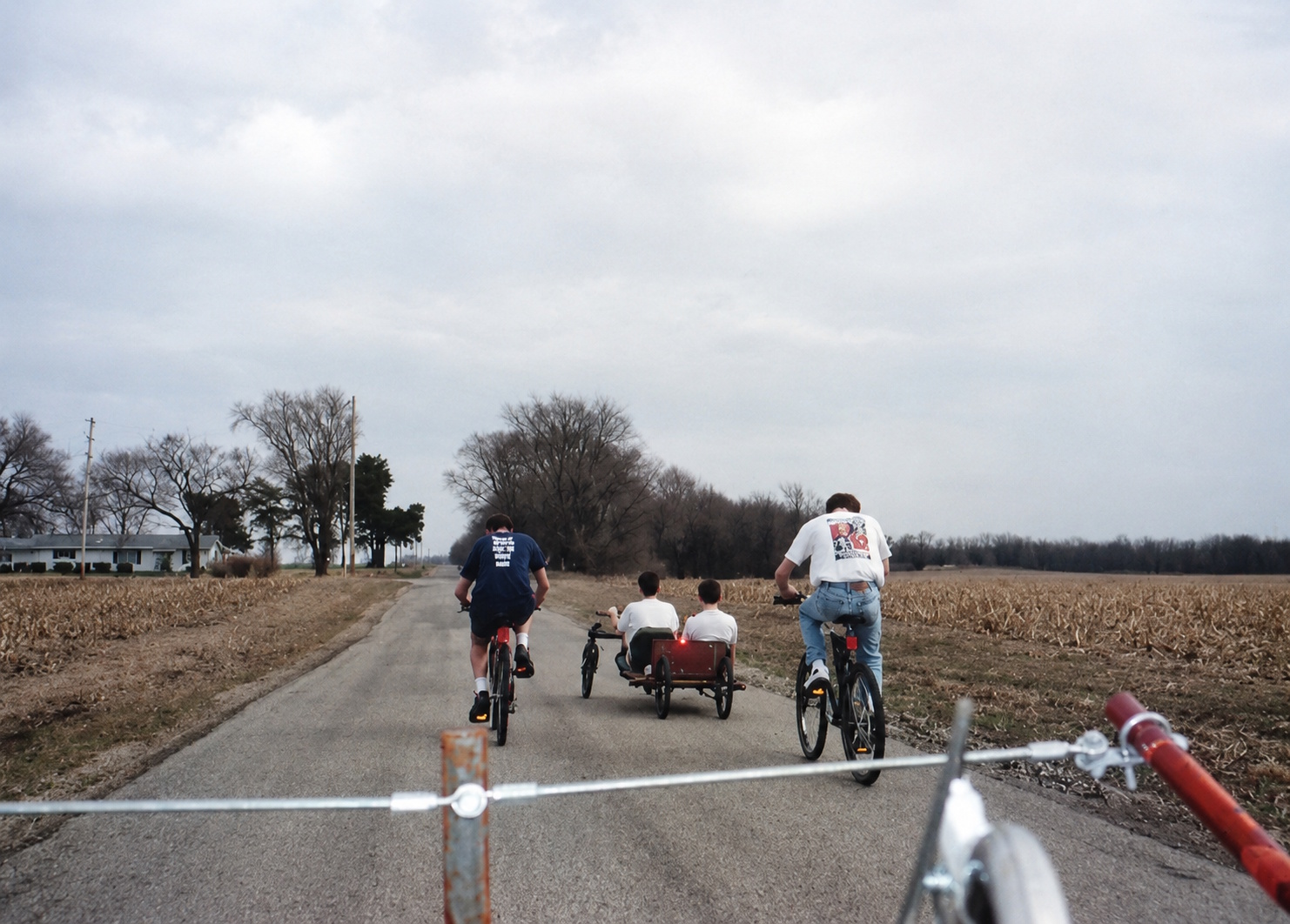
The bikemobile was an endless source of fun. On occasion we would take it through town, always attracting second glances. We’ve traveled at night thanks to the headlights and reached a top speed of 33 mph, which is quite exhilarating on a machine that rides so close to the ground.


On level ground, Paul and I once got up to 22 mph, quite a feat, since, admittedly, the machine is quite heavy, due to it’s shear size (4 ft. wide and 8 ft. long). However, it rides comfortably and handles well.
Bikemobile 2
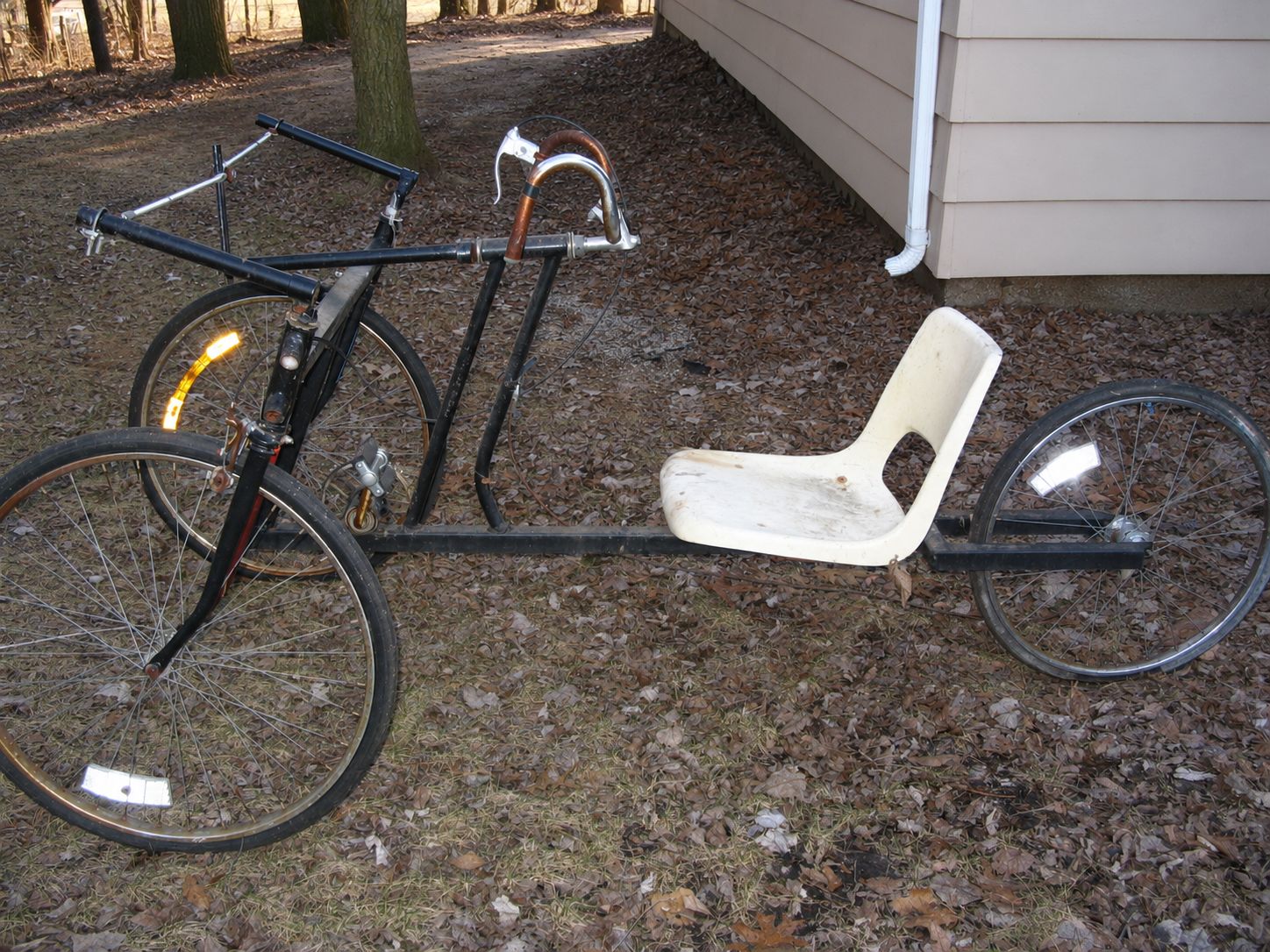
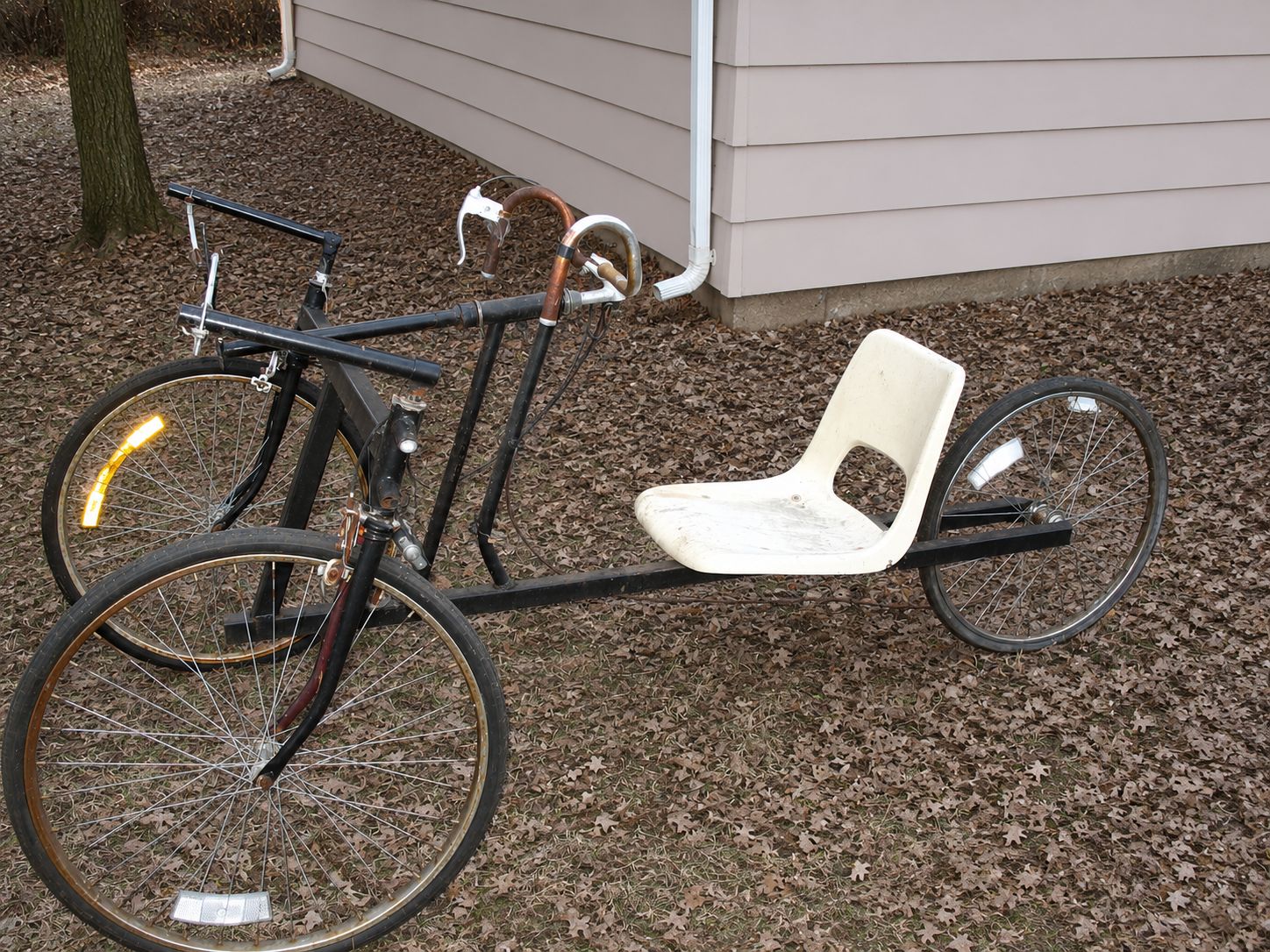
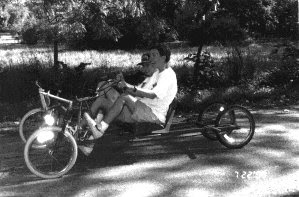
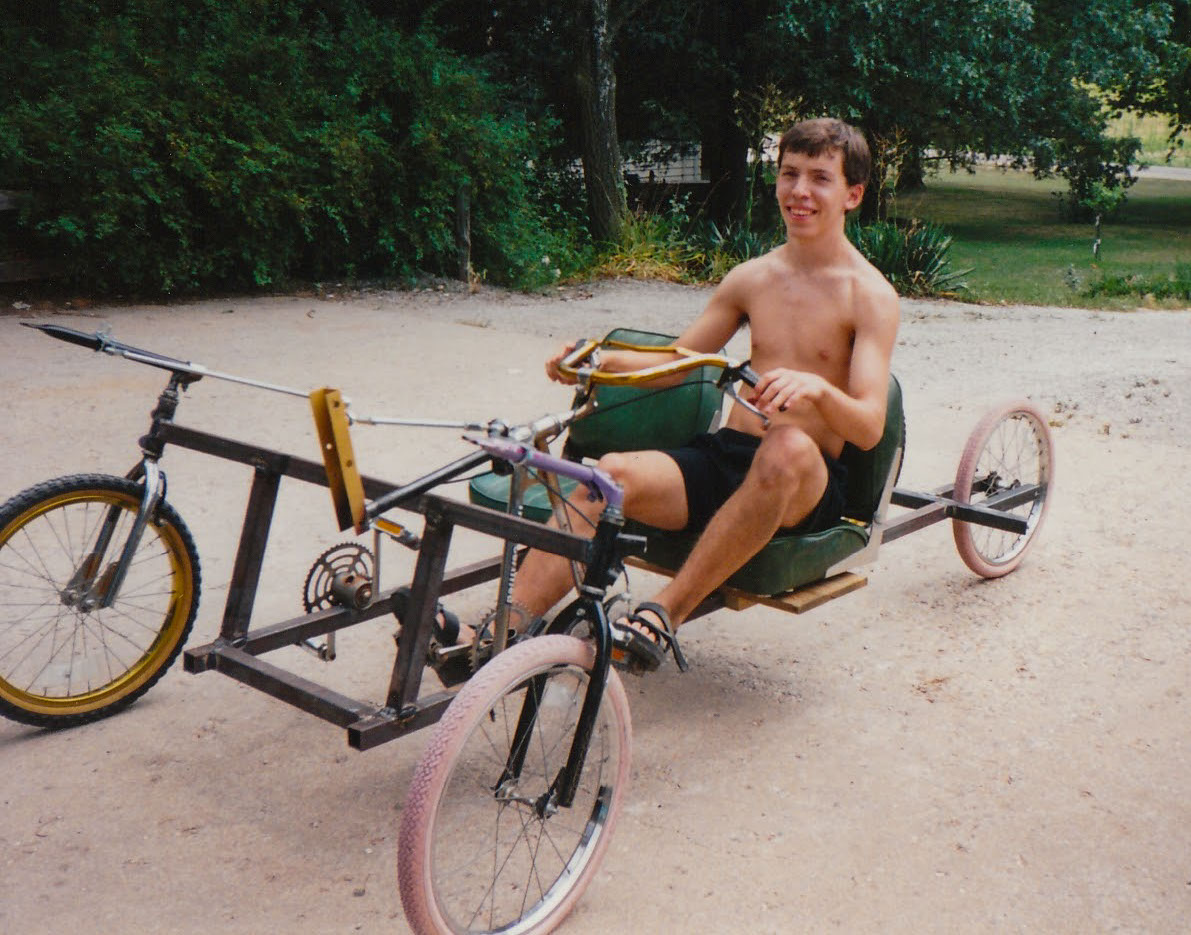
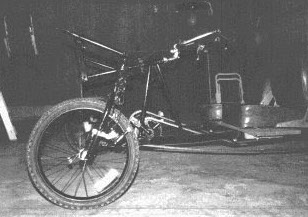
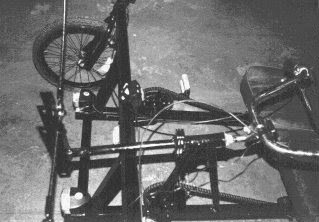
In the summer of 1996, I decided to refine the design on this monstrosity and make another slightly more graceful machine. My solution was to go smaller, making a one seat version. This version uses bigger wheels, a shorter wheelbase, only one rear wheel, and the best part of all—a three speed transmission. In addition, the steering geometry was changed a bit to tighten the turning radius.
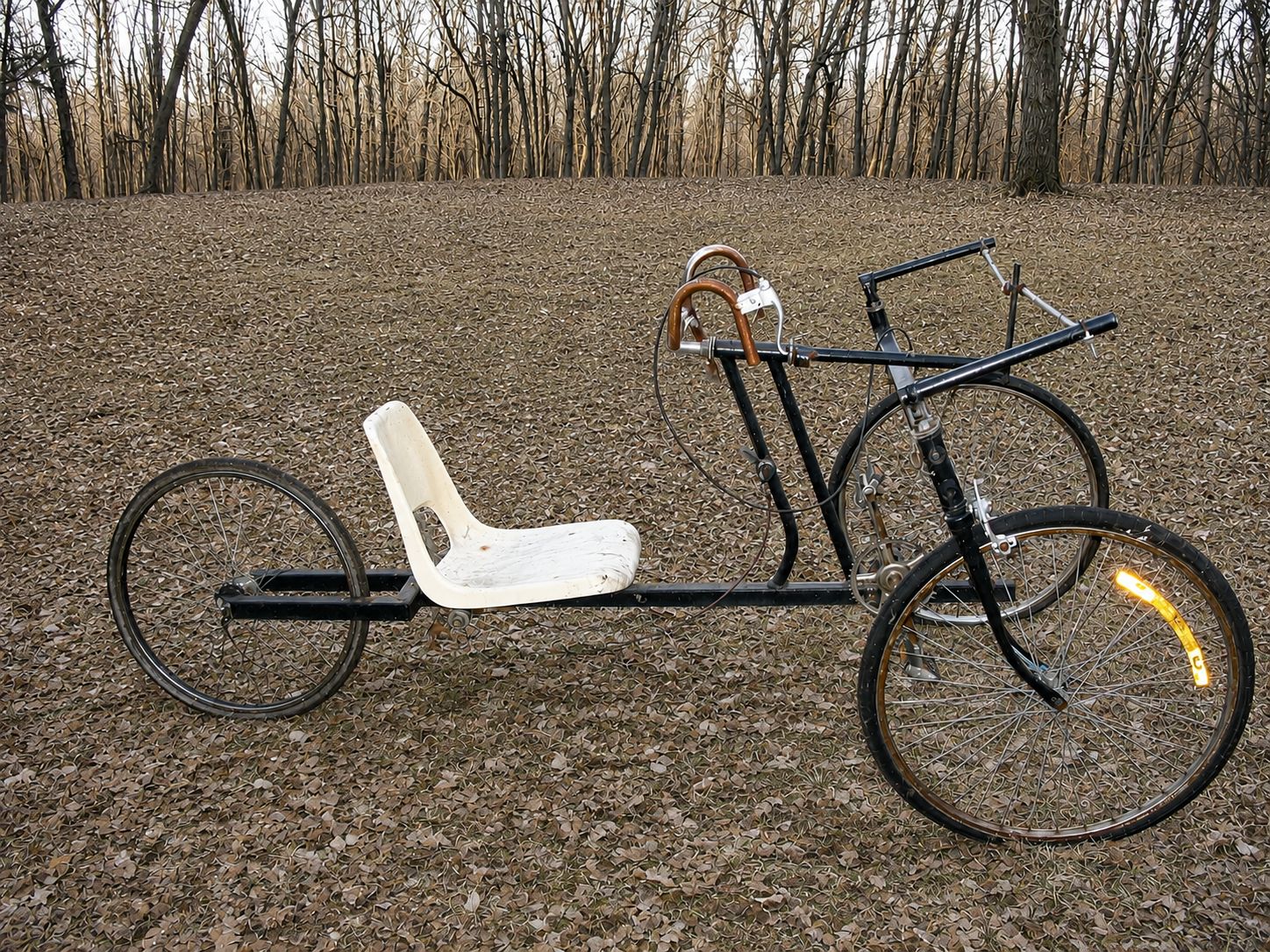
This newer bike-mobile has a distinct advantage—lightness and speed! With its three-speed transmission it can successfully keep up with most regular bikes. However, there are sacrifices. This machine is less “social,” having only one seat. Also, having only rear wheel, the stability is diminished. I actually rolled it once trying to ride off the road and across a ditch.
Bikemobile 3?
The next step in the Bikemobile line is a 4-passenger (4-pedaler) version. It will have to be pretty heavy, but we figure adding two more people effectively doubles the horsepower. To deal with the added weight, we’d need something stronger than kids’ bike wheels.
2026 Update
30 years later, we never got around to our 4-seater project, and even if we still lived in the same state as each other, we’d need our adult kids to pedal for us now. 🙂 The original Bikemobiles were donated to a young man in town back in 2005.
Here are a few more things I remember but didn’t write back when I originally posted this project.
- Our headlights were powered by a 6-cell NiCd RC car battery pack. One time we rode it into town at night, and I had to stop at my girlfriend’s house to charge our battery for the ride home
- I requested a meeting with the local sheriff to ask about whether it was street legal. He told me everything was fine, but be careful since the headlights being narrow looked a bit like a full size car in the distance.
- Somewhere along the line we swapped the fishing boat seats with fiberglass seats that the high school was discarding. The boat seats were made of wood and couldn’t handle pushing against them.
- The driver’s side was geared pretty low, and the passenger was geared higher. That meant that the driver was responsible for getting moving from a stop, and the passenger was more useful at higher speed.
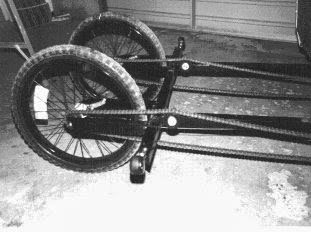
- My dad procured us some motorcycle chain, which was the right gear pitch but way wider than it had to be. We used some rollers to route the chain under the seats. Being single-speed, chain management was pretty easy.
- One time we took the bikes to town, along with water guns. In an old asphalt playground, we had a water gun fight on bikes, which really only worked for the 2-seater (since you have a gunner!). We turned too fast and sent the gunner tumbling off, and popped some spokes on the rear wheels.
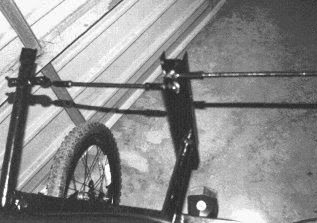
- In the photos you’ll see sharp metal points behind the seats. The original idea is that we might need two more rear wheels, but we changed our minds. They wouldn’t have been powered, and having four wheels across wouldn’t have worked, since the driven wheels would likely be lifted off the ground.
- We originally called it the “BikeCar” and when I put it on my website, I got a cease and desist letter from the BikeCar corporation, defending their IP. So this is definitely a Bikemobile, not a BikeCar… 🙂
[full disclosure- I used ChatGPT to clean up the outdoor images. The bikes were piled amongst some junk behind the garage so I cleaned up the background]

Related Projects
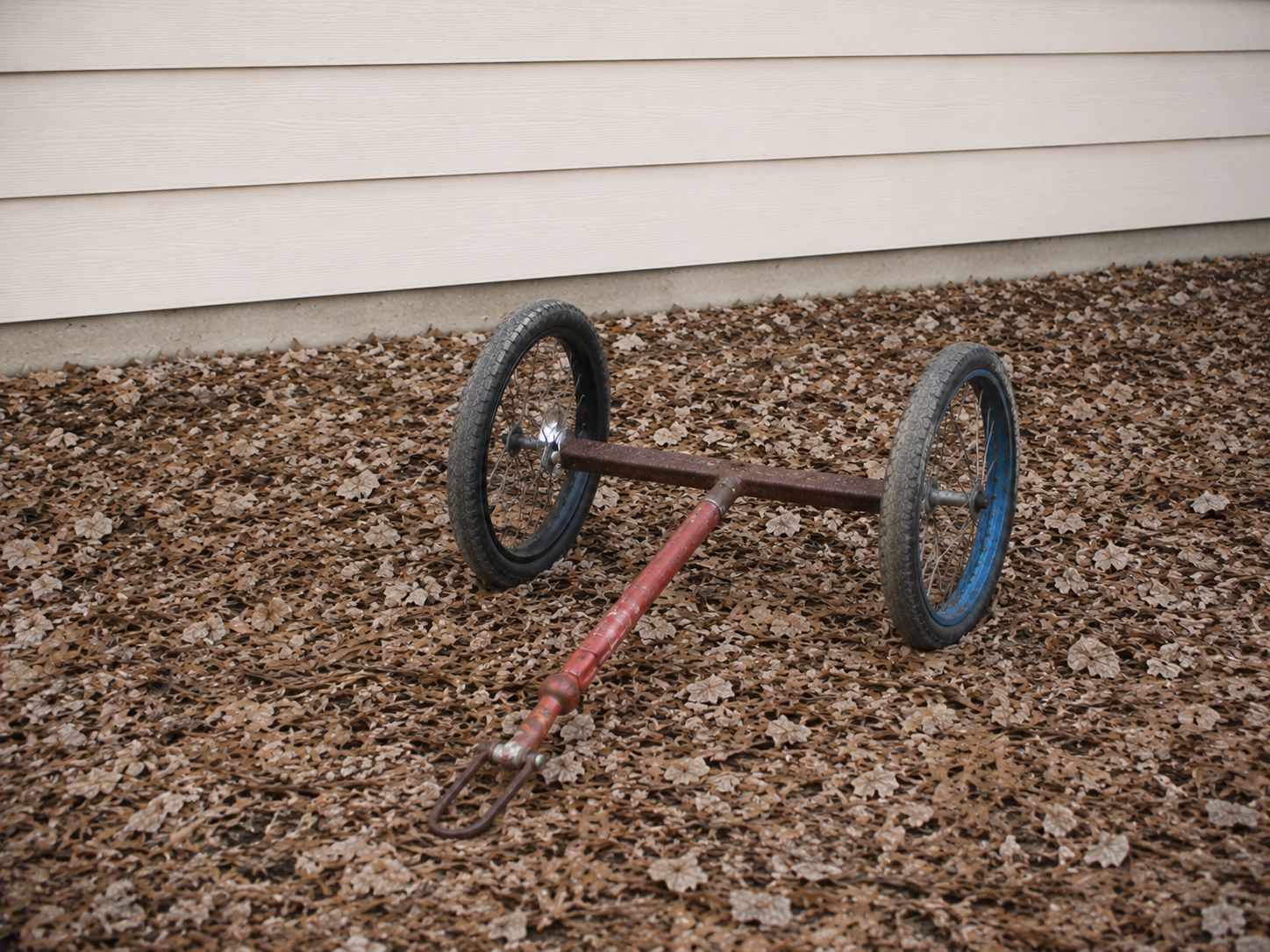
Kludged together front-wheel-drive recumbent bicycle made from two donor bikes
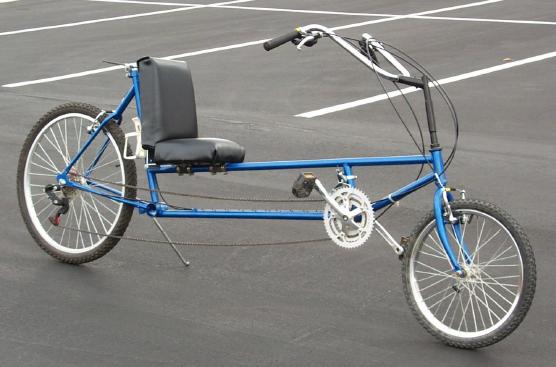
Home-built long wheelbase recumbent bike, Inspired by the Tour Easy production model.
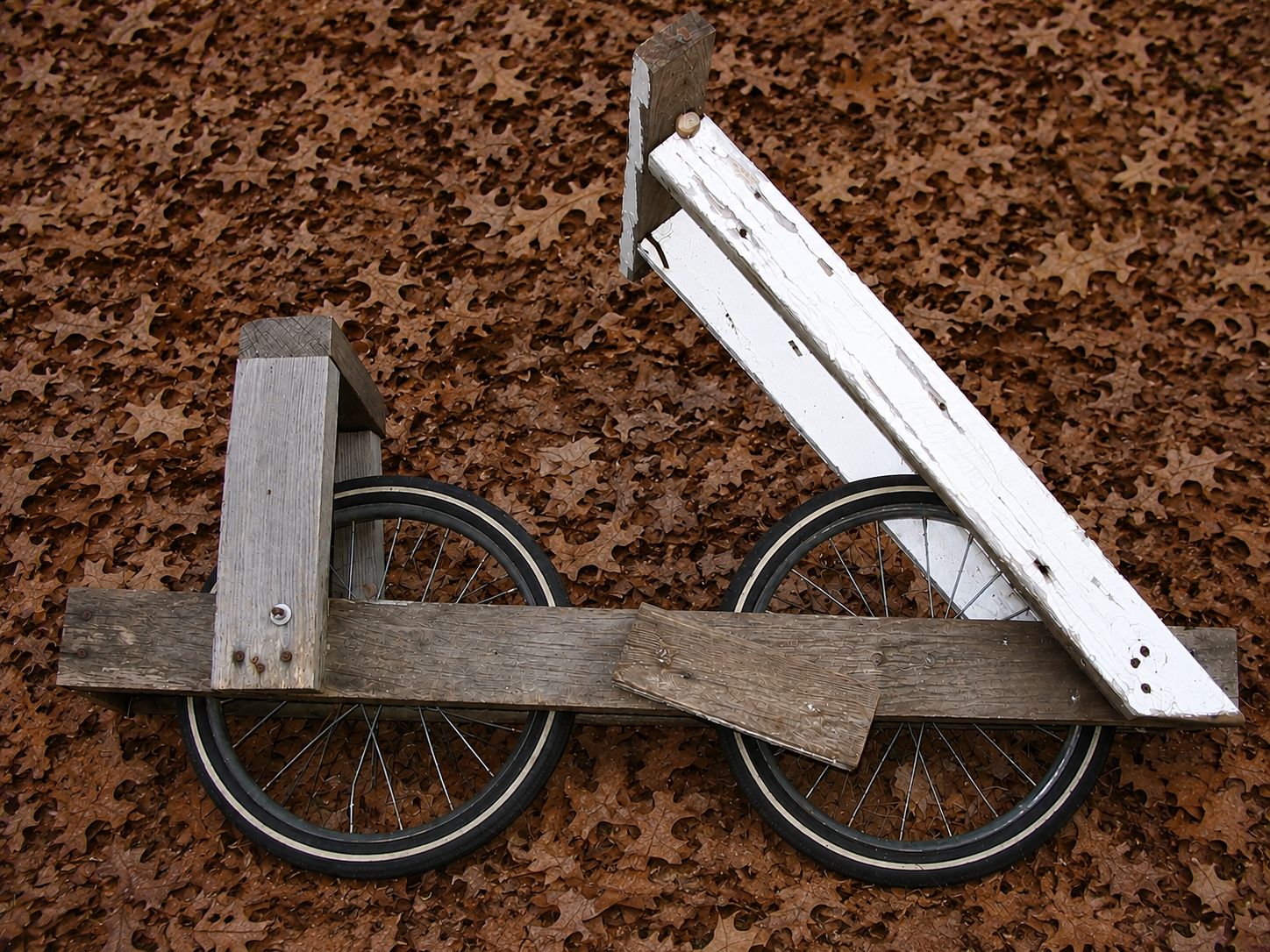
A quick and easy way of transporting bicycles in the bed of a truck without drilling or clamping on the truck itself